
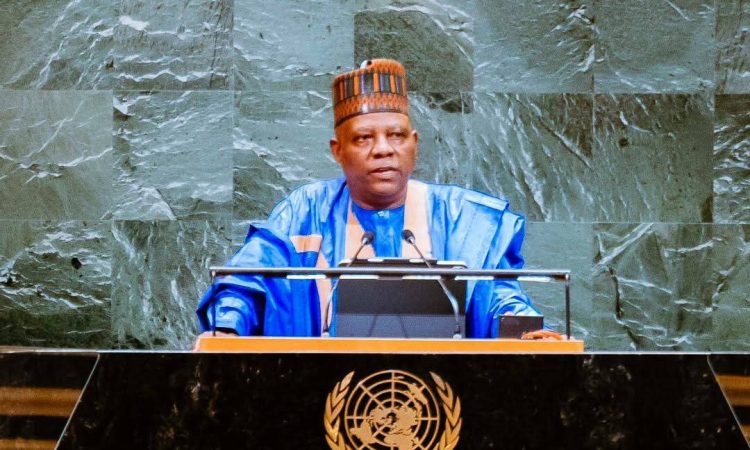
At the 80th United Nations General Assembly, President Bola Ahmed Tinubu—speaking through Vice President Kashim Shettima—delivered a stirring message about Nigeria’s stance in the face of terrorism and global conflict. The core of that message: terrorism despises what Nigeria stands for—tolerance, human dignity, and moral responsibility over cruelty, repression, and fear.
Key Points from the Speech
- Tolerance Over Tyranny
Tinubu (via Shettima) stated that terrorists “despise” Nigeria because it opts for tolerance rather than tyranny. The contrast is set up not just as a moral choice, but a defining identity for the nation. - Refusal to Be Indifferent to Suffering
Nigeria’s approach is not limited to fighting militants; it includes caring for victims of war and displacement. The speech emphasizes the importance of feeding and sheltering innocent people affected by terrorism and armed conflict. - Global and Local Moral Responsibility
Attention was drawn to international crises, including violence in Gaza, aggressions in Qatar, and other regional tensions. Nigeria asserts that violence somewhere does not stay confined—it has ripple effects that threaten peace elsewhere. - Strong Support for Two-State Solution in Palestine
Tinubu reaffirmed Nigeria’s position that a two-state solution is the “most dignified” route to peace between Israelis and Palestinians. He emphasized that Palestinian lives matter and should not be collateral damage in any broader conflict. - Price of Peace & Domestic Reforms
The speech acknowledged that maintaining peace demands constant vigilance. It also addressed the tough economic and policy choices Nigeria has been making, such as removing distortions like subsidies and reforming currency controls, all in the drive toward growth and prosperity. - Call for Cooperation & Shared Humanity
Tinubu appealed to global institutions and multilateral action to defend civilised values. He framed the fight against terrorism as more than military—it’s a fight for humanity, for democratic institutions, and for shared values.
Analysis: Why This Matters
- Moral Framing of Security
Tinubu’s speech positions Nigeria’s fight against terrorism not just as a security priority, but as a moral imperative. The narrative emphasizes human dignity, protection of civilians, and justice—not just retaliation or force. - Balancing Domestic & International Pressures
By speaking out on international conflicts while insisting on domestic reforms, Tinubu is presenting a Nigeria that cares both about its internal stability and its role in world affairs. It’s a balancing act: strengthening the country at home while holding onto its principles abroad. - Relevance to Nigeria’s Own Experience with Terrorism
Nigeria has had a long history of insurgency, banditry, and extremist challenges. The speech gains weight because of lived experience—it isn’t just theoretical. This gives credibility to the assertions about why Nigeria refuses tyranny and instead chooses paths that may be harder but more just. - Domestic Implications
The reference to tough policy decisions (economy, reforms) signals that Tinubu expects Nigerians to accept some hardship, possibly as part of the cost of security, stability, and moral clarity. It’s also a way of setting expectations that peace comes with trade‑offs. - International Diplomacy
A strong statement at the UNGA helps Nigeria stake out a position in international fora. By aligning with universal values like human dignity, freedom, and peace, Tinubu is signaling to allies, adversaries, and global institutions where Nigeria hopes to stand on matters of war, peace, and justice.
Criticisms & Questions Ahead
- Policy vs Words: Skeptics could ask whether the speech’s lofty ideals translate into policy outcomes—like protection of human rights, addressing root causes of extremism (poverty, marginalisation), and ensuring displaced persons are aided adequately.
- Economic Cost: Removing subsidies, reforming currency, etc., can cause hardship. The administration will need to manage the social consequences of such reforms to ensure that peace is durable.
- Implementation & Accountability: Fighting terrorism requires more than speeches—security force reforms, intelligence, good governance, corruption control, etc. Nigeria’s challenge remains in execution.
- Regional Cooperation: Terrorism often crosses borders. How Nigeria cooperates with neighbours—sharing intelligence, securing borders, dealing with cross‑border funding—will be critical.
Conclusion
President Bola Tinubu’s message at UNGA frames Nigeria as a country that chooses the harder path: tolerance over tyranny, peace over fear. In portraying terrorism as despising Nigeria because of its moral stance, he is challenging both domestic and international audiences: can Nigeria show that peace built on values not just force is possible?
It’s a message

 By
By